

If you’re serious about becoming a content creator in 2026, it’s a strong time to start.
Creators have more places to post their content and more ways to earn than ever. The creator economy is also on track to reach roughly $500 billion by 2027 (by one estimate), and hundreds of millions of people worldwide post content online. Plus, more than 1.5 million Americans earn a full-time living as digital creators or influencers.
But that means online spaces are crowded, and standing out in 2026 is different than it has been in years past. The creators who will thrive post unique content and intentionally build real relationships with their followers.
That’s why I created this guide. Below, I break down how to become a content creator—and highlight how Fanvue can help you build a successful, sustainable creator career.
Let’s dive in!
Join Fanvue to kickstart your content creator journey today
Know What You Actually Need to Get Started
You need a lot less than you realize to get started as a creator.
What you don’t need:
- A fully formed “brand.”
- A $1,000 camera, fancy lighting equipment, or expensive editing software.
- Dozens of content ideas up front.
- A new personality, a different appearance, a polished “creator voice,” different values, or anything else that doesn’t feel like you.
- Advanced video editing skills.
- To be comfortable in front of the camera (yes, really).
What you do need:
- A smartphone or laptop.
- Free editing apps or software (template-based apps like Capcut are a great option for beginners).
- A simple microphone if you’re camera-shy, so you can record voiceover content. (Your phone or laptop’s built-in mic is fine for this!)
- A rough idea of what kind of content you want to create.
- A repeatable schedule that fits into your other commitments and is easy to stick to.
- Willingness to publish content even before it feels perfect.
- A habit of noticing what people respond to (questions, comments, DMs, etc.).
Choose Your Niche & Unique Angle
With so many content creators out there, you need something that sets you apart. This is where having a content niche comes in.
Broad niches, like simply “fitness” or “tech,” are hard to grow in because they’re vague. You need a “micro-niche” so people can quickly understand who your content is for, what problem it helps solve, and what they’ll get out of it if they follow you.
Here are some examples:
- Broad: Fitness content → Micro: Postpartum fitness for moms returning to the gym
- Broad: Tech tips → Micro: AI automation specifically for Notion users
- Broad: Personal finance → Micro: Budgeting strategies for freelance designers
- Broad: Cooking → Micro: 15-minute meals for busy software engineers
- Broad: Career advice → Micro: LinkedIn growth for B2B SaaS founders
- Broad: Travel influencer → Micro: Luxury hotel reviews or airfare deals
The more specific you get, the easier your content decisions become. Instead of thinking, “What should I post about fitness today?”, you're thinking, “What challenge did a new mom in my DMs mention this week?" That's infinitely more actionable.”
Finally, don't think of a niche as a rigid box that you have to stick to forever. Today, your niche gives you direction. But you can always pivot later once you understand your audience and your own expertise better, and get a clearer idea of what’s working for you.
How to validate your niche
Here’s how you can feel confident about the niche you’re choosing:
- Search for existing content. Spend 20 minutes on TikTok, Instagram, or YouTube searching keywords related to your niche (such as “fitness tips for new moms). If you find existing content and engaged audiences, that's actually a good sign—it means there's demand. Otherwise, it might mean the audience is too small or doesn't exist.
- Check what questions people are asking. Look at comments on similar creators' posts, Reddit threads, Quora, or Facebook groups related to your topic. Are people actively asking questions? Are they frustrated that they can't find answers? That's your opportunity.
- Test it with 5–10 posts. Don't overthink it—just start posting content in your chosen niche and see what happens. Do people engage? Do they save your content? Do they DM you with questions? If you're getting signals that people care, you're onto something.
- Talk to your potential audience. This is the most underrated validation method. Send DMs to people who might fit your target audience. Ask them what they struggle with. You'll learn more in 10 conversations than you will from weeks of brainstorming alone.
Mini exercise: Create your creator identity sentence
When you’re feeling lost or overwhelmed (and trust me, every creator has at some point), having a simple identity sentence you can come back to is incredibly grounding.
Here’s the formula:
Examples:
- "I create 60-second productivity tips for burned-out corporate employees so they can reclaim their time without quitting their jobs."
- "I create AI workflow tutorials for freelance designers so they can automate boring tasks and focus on creative work."
- "I create postpartum fitness routines for new moms so they can feel strong again without spending hours at the gym."
Now write yours:
Decide What Content Formats You’ll Use
Now that you know your niche, you’ll need to pick the formats you’ll create your content in.
Pick 1–2 of the following to start out with:
- Short-form video (15–60 seconds): Best for reach + fast testing.
- Long-form video (8–20 minutes): Best for trust + deeper education.
- Photo carousels: Best for clarity + shareability.
- Standalone photos/graphics: Best for lifestyle, aesthetics, and personality
- Text posts: Best for strong POV + storytelling.
- Audio: Best if you’re already recording conversations
Courtney Johnson, a career and personal brand creator, has several examples of these content types on her Instagram page.
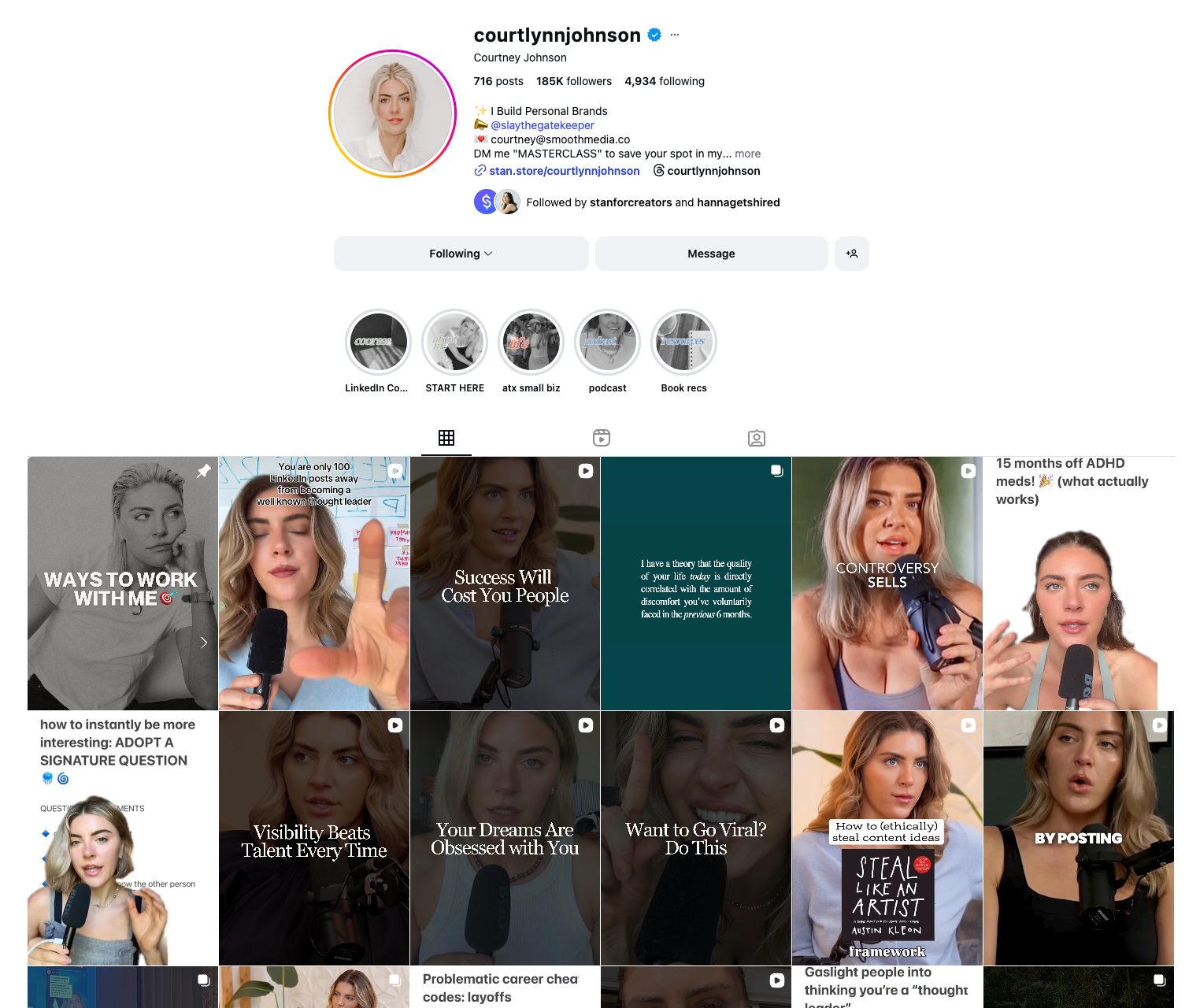
When you’ve locked in the 1–2 formats you’ll prioritize in the first 90 days, let your personality shine! Maybe you’re more of a serious academic researcher, or you want to be a life coach known for being funny and relatable. Overall, there are no rules about this; just pick what feels best for you.
Build Profiles That Capture the Right Attention
Before you start posting content, make sure your profiles are set up properly. This is like your billboard, where new followers will learn more about you and decide if they trust and want to follow you.
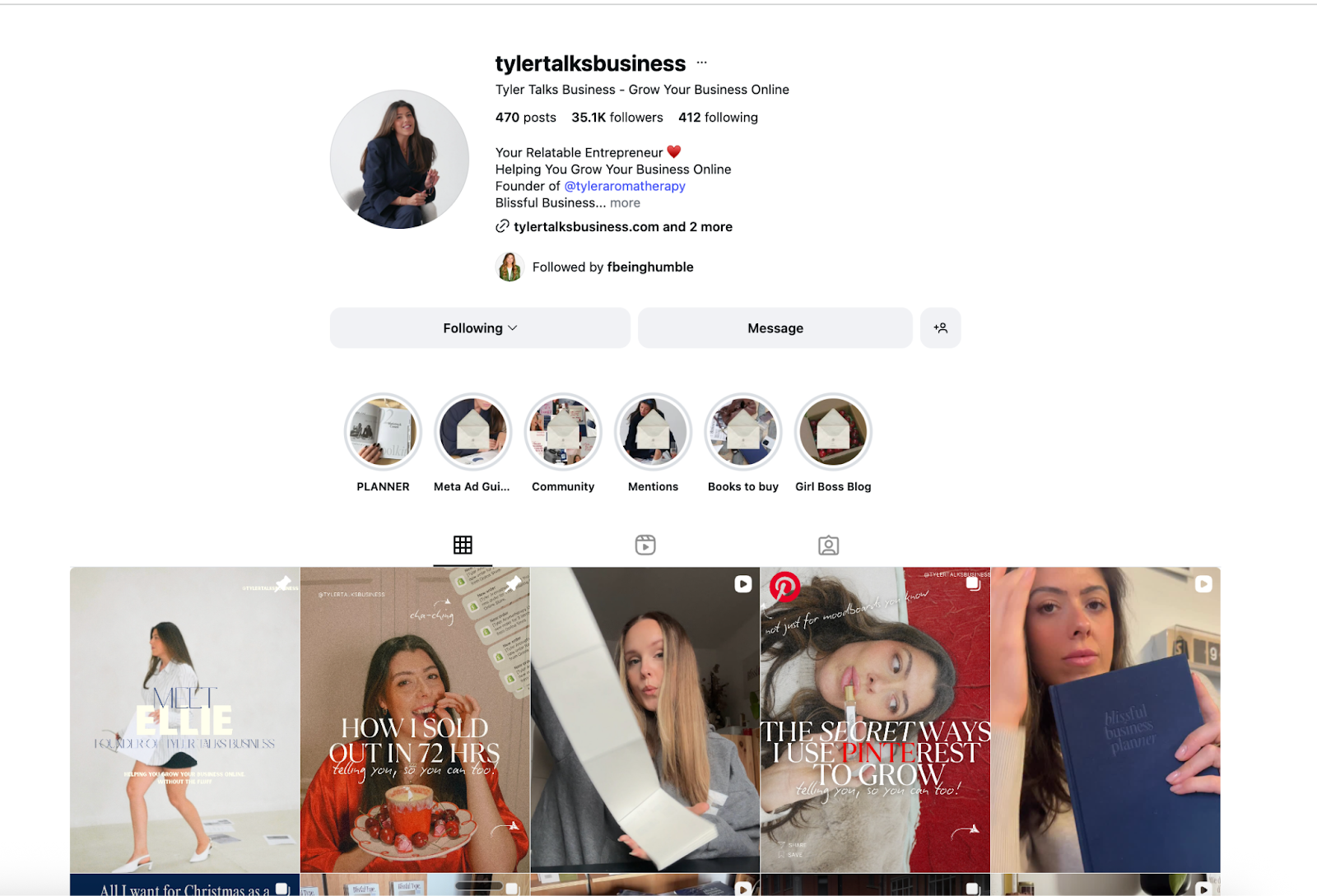
Profile creation checklist
✓ Bio that clearly states what you do and who you help: I help [X] do [Y] through [Z]."
✓ Profile photo that’s clear and on-brand: It doesn't need to be a professional headshot, but it should be recognizable and consistent across platforms.
✓ Link in bio that directs to your priority destination: This could be your newsletter signup, your Fanvue creator page, your website, or a Linktree with multiple options. Whatever it is, make sure it’s up to date and working.
✓ Pinned posts that showcase your best work: This is often the first thing new visitors will see after your bio. Make it count—pin something that got great engagement or perfectly represents what you’re about.
✓ Contact method that’s easy to find: Whether that's email, DMs, or a booking link, don't make people hunt for how to reach you.
✓ Consistent username across platforms (if possible): Makes it easier for your audience to find you as you expand.
Here’s a great example from Tyler Talks Business:
Additionally, I recommend pinning a few posts to the top of your profile (on the platforms that allow this) to introduce yourself and your work.
Digital marketer Daniela Queiroz also shares some helpful advice on choosing what posts to pin:
- A post that gives a backstory about who you are and why you started your business.
- A post that offers value, like an educational guide or a case study, to build trust.
- A post detailing your offer and how you work with people, whether it’s a product, service, community, or something else.
Don’t Try to Do Everything at Once
Becoming a content creator is exciting, but you shouldn’t bite off more than you can chew. The beginning stages are about getting comfortable with showing up consistently and avoiding burning out before your career can really take off.
Instead, focus on your first 90 days: What do you want to achieve, and where can you post?
I recommend setting two 90-day goals: 1 that’s measurable (e.g., gain 500 followers, earn your first $100 from content, or get 3 paying subscribers) and 1 that’s based on process or skills (post 1 video per week or learn to create basic graphics).
As for platforms, you shouldn’t try to appear on every site at once. Pick 1 “main” platform to commit to for the first 90 days. You can repost elsewhere, but this should be where you upload all your content first. Sticking to 1 platform also gives you the perfect chance to learn what works well and what audiences respond to!
Here’s a breakdown of content by platform:
- YouTube: Long-form educational videos and short-form videos; best for educators and experts, coaches, podcasters, and creators building authority in a niche.
- Instagram: Short-form video, carousels, and relatable content; best for lifestyle creators, coaches and personal brands, and visual niches like fitness, travel, design, and food.
- TikTok: Short-form videos, educational and entertaining content; best for new creators starting from zero, educators, and niche experts.
- LinkedIn: Text posts and carousel graphics; best for B2B creators, coaches & service providers, and educators.
- Substack: Long-form writing, essays, and analysis; best for writers, journalists, and founders with strong POVs.
After 90 days, you can review what worked and adjust your approach. But until then, just focus on posting consistently.
Create a Realistic Content Plan
Your progress as a content creator shouldn’t depend on motivation or willpower. It needs to be realistic and fit around your real life.
Start by defining a few content pillars: the themes you’re comfortable talking about over and over. For example, mine are newsletters, personal branding, and entrepreneurship. Every one of my posts fits into 1 pillar, or overlaps a couple of them. That alone removes a huge amount of friction when deciding what to share.
After you’ve set your pillars, build a light structure around them:
- Pick a posting cadence you can realistically commit to (even 1–3 posts per week is enough to start).
- Batch-create content when you have energy, then batch-schedule it using tools like Buffer or other scheduling platforms.
- Leave intentional space on your calendar for spontaneous posts, replies, and conversations.
Know How to Succeed on Socials…
Social media platforms are great for building reach and momentum, but you can’t approach each one the same way. Below are some strategies to use across TikTok, Instagram, and YouTube Shorts as you’re starting your creator journey.
TikTok strategy
TikTok is unmatched for rapid audience growth. The algorithm actively pushes your content to new viewers, so you can go from zero to thousands of followers faster than on any other platform. Here’s how to succeed on TikTok:
- Hook formula: Your first 3 seconds determine everything. Start with a pattern interrupt—a bold statement, a question, or something visually surprising. Example: "If you're still doing X, stop immediately!" or "The one thing no one tells you about Y."
- Posting frequency: Aim for 1–3 posts daily for serious growth. TikTok rewards volume and consistency.
- Calls to action: Direct viewers to your Instagram for "more daily tips" or mention your Fanvue profile in your bio for "exclusive content."
Instagram strategy
Instagram is your trust-building platform. This is where casual followers become invested fans.
- The flow: Stories → DMs. Use Stories as your daily "proof of life" content. Show up consistently, even if it's just sharing what you're working on or answering a quick question. This keeps you top of mind, and audiences stay engaged.
- Warm up cold audiences by responding to every comment and DM in your first few weeks. When people feel seen, they're exponentially more likely to support you. Ask questions in your Stories to spark conversations, then move those conversations to DMs where you can create deeper connections.
YouTube Shorts strategy
YouTube Shorts gives you the discoverability of TikTok with the evergreen benefit of YouTube's search engine. Your Shorts can continue getting views months or even years after posting. YouTube audiences tend to be more willing to pay for content, so this is a particularly strong funnel.
- The path: Shorts → Community tab. Use Shorts to drive views, then make the most of YouTube’s Community tab to share updates, polls, and direct people to your paid platforms.
… But Treat Them as Funnel to Your Bigger Goals
Although socials can be strong reach-building tools, they’re volatile. If your entire business depends on 1 platform’s algorithm, you’re a single change away from zero. You want people to find you on social media, then move that relationship to a place made for deeper connection and monetization.
This could be a paid newsletter, a membership site, or a platform like Fanvue. No matter which you pick case, you should do these 3 things:
- Put your link in every bio.
- Mention it in content when relevant (“Find the full routine on my Fanvue page!”)
- Make 1 pinned post or story highlight that explains what people get (specific benefits, not vague “support me”).
If you use Fanvue, you can use tracking links to see which platform drives the most signups, so you’re not guessing where to focus.
Learn How to Connect With Fans Meaningfully
The connection you build with your audience is infinitely more valuable than the content you put out.
When you chase algorithms, you’re creating content for a machine that changes every few months. When you focus on people, you’re building something sustainable: a community that follows you—and offers paid support—across platform changes, algorithm updates, even niche pivots.
Creators with 1,000 true fans who feel personally connected can even outearn creators with 100,000 passive followers.
So, how can you do this? Here are some simple daily behaviors that can help you gain superfans:
- Respond to at least 3 DMs or comments daily with genuine engagement. Ask follow-up questions. Remember the details people share.
- Spend 15–20 minutes each day engaging with your audience's content too. Relationship-building is a 2-way street.
- Show fans you care about them as people. For example, wish them a happy birthday if they commented that they’re turning 30, or follow up and ask how their job interview went if they messaged you for advice beforehand.
- Show up in posts and stories with unpolished, real moments. The messy desk, the outtakes, the honest thoughts—that’s what followers relate to, not “perfect” content.
Monetize the Modern Way
In 2026, the creator landscape is shifting a major shift. For a long time, success has depended on going viral or amassing a following of millions.
But this model has 3 fatal flaws: You don’t control the algorithm, brand deals are unreliable, and followers aren’t fans—someone who scrolled past your video once isn't the same as someone who wants to hear from you every day.
Enter a new model: connection-first monetization.
Creators are now increasingly using platforms like Fanvue to build genuine relationships with their supporters and make a predictable, sustainable income—because those connections are exactly what drives those earnings. When fans feel like you see, understand, and value them, they’re more likely to pay for access and attention.
The key thing to remember is that you have to maintain trust while you monetize. Here’s what to do:
- Start with what already works. Look at your top posts’ saves, shares, replies, and comments, and your DMs, to see what people are interested in and asking about. For example, maybe followers keep requesting the full workout behind a quick demo or for advice on the best way to organize a 2-week trip across Europe so they don’t miss any major sites. Those signals are your best guide for what people would actually pay for.
- Use 1 paid method to start. Subscriptions and one-off paid digital products, such as guides, are usually the best to begin with because they’re a predictable stream of income for you and a familiar model to most people. But you could also try brand deals or affiliate links (for things you actually use), too.
- Make it clear what fans get for their money. Explain exactly what subscribers will get, e.g., “5 posts per month that don’t get shared anywhere else, an extended version of my weekly conditioning workout, and behind-the-scenes clips.” That’s a lot more enticing than “exclusive content.”
- Don’t charge too much too fast. You can always increase your prices as you start posting more and gaining more paid supporters. The aim is to make sure you’re charging what feels fair for what you’re giving fans.
- Keep your free content valuable. It can be thrilling when money starts coming in, but don’t let that excitement change the way you approach content for non-paying fans. Make sure all free posts still provide value to your audience, and treat your exclusive content as the extras for your most engaged supporters.
Become a Content Creator Today
No matter where you’re starting from, you don’t need perfection or a massive following to become a content creator. The journey starts with choosing a clear niche, committing to 1 primary platform, picking formats that feel right for you, and showing up consistently.
The creators who build lasting careers also focus less on reach and more on relationships. A smaller audience that trusts you, engages with you, and feels seen will always be more valuable than a large group of passive viewers. That connection is what leads to growth, monetization, and long-term momentum.
Fanvue is built to support this approach. It gives you simple tools for subscriptions, messaging, and flexible revenue streams so you can spend less time managing the business and more time building real relationships with your audience.
FAQs About Becoming a Content Creator
Is 30 too old to become a content creator?
No, 30 isn’t too old to become a content creator. Many successful creators started in their 30s, 40s, or even 50s. Having life experience, professional expertise, and a clearer sense of who you are can be a massive advantage. It can help you identify your unique niche and resonate more with your audience.
How do content creators get paid?
Content creators get paid in multiple ways: brand deals, platform payouts (e.g., YouTube AdSense and TikTok Creator Fund), subscription platforms like Fanvue, digital products, affiliate marketing, and consulting. The smartest creators use a variety of these revenue streams.
How many followers do I need to be a content creator?
You don’t need a certain number of followers to be a content creator. You become one the moment you start creating!
When it comes to earning money from content, you need the right audience and monetization platform, not the biggest following. Some creators can make money with as few as 500–1,000 genuinely engaged followers.